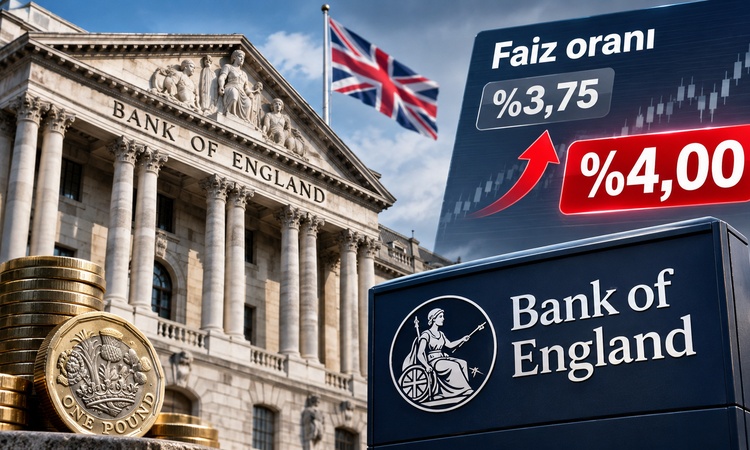
The Bank of England has raised interest rates to 4% as rising energy prices threaten to push UK inflation towards 5% in 2027.
The Bank of England has raised its benchmark interest rate from 3.75% to 4%, warning that sustained increases in global energy prices could push UK inflation to around 5% by the middle of 2027. The decision follows stronger-than-expected economic activity and growing concerns that higher energy costs could spread into consumer prices and wages.
The Bank of England’s Monetary Policy Committee (MPC) voted by eight to one to increase Bank Rate by 0.25 percentage points to 4% at its meeting ending on 4 November 2026.
The decision, announced on Thursday, 5 November, comes as the continuing conflict in the Middle East places further pressure on global energy markets and the UK inflation outlook.
Eight committee members supported the quarter-point increase, while Catherine L Mann voted for a larger rise of 0.5 percentage points, which would have taken Bank Rate to 4.25%.
UK Inflation Expected to Reach Around 5% in 2027
The Bank warned that inflationary pressures have intensified as the Middle East conflict enters its ninth month.
UK Consumer Prices Index (CPI) inflation rose to 3.5% in September and is now expected to reach approximately 4.5% in the first quarter of 2027 before rising to around 5% in the second quarter.
The Bank expects inflation to decline subsequently as the direct effects of higher energy prices fade and restrictive monetary policy continues to weigh on price pressures.
However, policymakers remain concerned that sustained increases in energy costs could eventually lead businesses to raise prices and workers to seek higher wages.
The MPC reiterated its commitment to returning inflation sustainably to the government’s 2% target.









 Türkçe
 العربية
 English
 Deutsch
 Ελληνικά
 עִבְרִית
 Русский
 Українська