
 ENFIELD
 HACKNEY
 HARINGEY
 ISLINGTON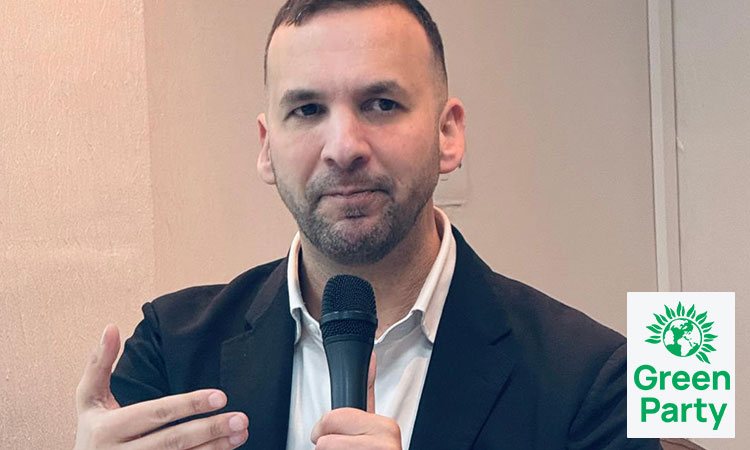

In an exclusive interview, Green Party leader Zack Polanski explained the policies of his rising party.
He also addressed messages to the Turkish and Kurdish communities living in the UK: “Protecting the environment and ensuring a livable world will be our priority. We will not implement populist immigration policies.
We will not be the party of wealthy donors; we will be egalitarian, and our doors will be open to everyone. Water distribution companies will be nationalized, energy bills will be reduced, and rents will be balanced. We will provide lower bills, VAT, and tax exemptions for small businesses…”
Question 1: Until recently, the Green Party was perceived mainly as an environmental movement. However, in recent polls, you appear as one of the parties capable of governing the country. How will you address the main challenges, for example the economy?
We have a clear plan for this country to tackle the issues that matter most to people in this country: to bring down bills, protect the NHS and rebuild our public services.
On the economy, I have laid out my priorities. First, we need to tackle the cost of living, with measures like water renationalisation and rent controls.
Second, we need a fair taxation system so the super-wealthy pay their fair share. And finally we need to ensure that the government is able to invest properly in this country and its people, to make us more resilient for the future and to get our economy moving.
Question 2: It appears that the Labour Party is shifting towards more right-wing policies due to concerns about losing votes to the rising right. In particular, recent immigration policies have been quite strict. Do you have concerns about this?
Could you explain your immigration policy? I’m disgusted by the Labour Party’s move to the right on immigration, particularly its cruel plans to extend the time people need to wait to get settled status.
This is a betrayal of people who have come here to make this country their home. The Green Party wants to see a fair migration system, with safe and managed routes for people to claim asylum here, and rights for people to work while they wait for their asylum claim to be processed.
We also want to see the failing Home Office broken up and replaced by a department for Immigration, Population and Infrastructure so that migration policy is driven by what works for this country and for migrants, rather than pandering to antimigrant sentiment.
The Green Party has a proud history of standing with migrants and refugees, and we will always stand up against racist and anti-migrant rhetoric, whether that comes from the far right or from this Labour government.
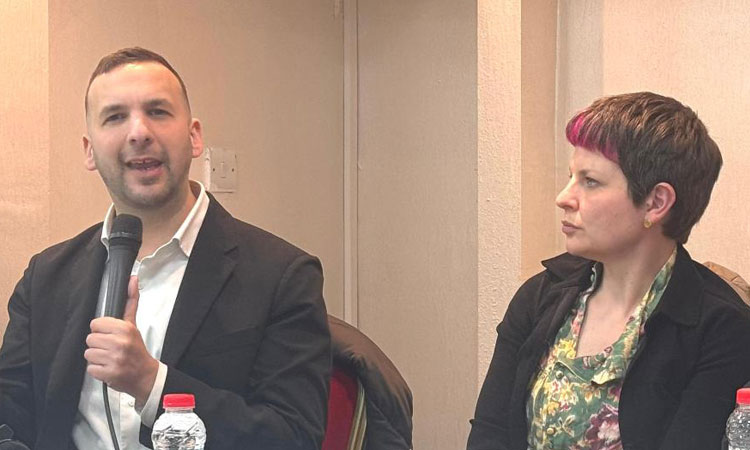
Question 3: In byelections across the country, there are regions where you have come third, second, or even first. In local elections, you may gain control of councils or potentially become part of a government in the event of an early general election. Are your teams ready to govern both locally and nationally?
The Green Party has grown incredibly fast over the last few months, and we’re scaling up rapidly to meet the needs of the new situation we’re in.
But we’re also incredibly lucky to have so many members with a wealth of knowledge, skills and
experience – and I can’t wait to see many of those members elected to council chambers across the country and get to work delivering change for their communities.
Question 4: Green transition policies are often criticised for being costly. How will you finance this transition in the short term without increasing energy costs for citizens?
It’s absolutely vital that the shift towards renewables does not result in extra costs for those already struggling to make ends meet – instead, the Green Party is committed to making polluters pay for the transition.
We also need to make sure the super-wealthy in society are paying their fair share – that’s why we want to see a wealth tax on multi-millionaires and billionaires.
Question 5: At a time of energy crisis, Germany— having previously abandoned nuclear energy—has expressed regret. What is your current stance on nuclear energy? Can renewable energy be sufficient on its own?
The development of nuclear power stations is too slow given the pace of action we need on climate.
Government shouldn’t be wasting time and money on costly nuclear projects – instead they should be putting every penny available into transitioning to wind and solar as quickly as possible, to insulate us from energy price shocks and bring down bills.
Question 6: Across the UK, the Conservative Party and the Labour Party have long dominated politics. Compared to these two parties, what alternative policies does the Green Party offer that are not present in their programmes?
At the heart of the Green Party’s policies are our core values of environmental, social, racial and economic justice. For too long, British politics has been dominated by big political parties who are only interested in maintaining the status quo, or protecting the interests of their wealthy donors. But the Green Party only has two vested interests: people and planet.
That means we can put forward the common-sense policies that other parties can’t – like rent controls to end rip-off rents, bringing water back into public hands to stop our bills going into shareholders pockets, and greater protections for our natural world.
Question 7: Balancing climate policies with industry and employment can be challenging. What is your transition plan, particularly for those working in the fossil fuel sector?
Right now, the government gives billions of pounds a year in tax breaks to oil and gas companies.
Meanwhile these same companies have paid billions of pounds to their shareholders, all whilst laying off large sections of the workforce.
The Green Party would instead use that money to create jobs and support workers – including funding a targeted jobs guarantee for those currently working in high-carbon industries like oil and gas, that ensures they can find equivalent alternative employment or funded retraining.
Question 8: Turkish and Kurdish communities are politically engaged. Due to the immigration and discriminatory policies of other parties, many may turn to the Green Party during this period. In the 7 May local elections, especially in London, have you given sufficient opportunities to Turkish and Kurdish candidates?
I’m really proud that the Green Party is a political home for people from so many different backgrounds, including people from Turkish and Kurdish communities that have been let down by this government and by all other political parties.
As Leader of the Green Party, it’s also my job to listen to those who don’t feel represented, and make sure we’re doing all we can as a party to welcome and give opportunities towards everyone who wants to get involved in growing our movement.
Question 9: Many people who have migrated to Britain work as self-employed individuals or run small businesses. They are increasingly struggling due to high rents, business taxes, and rising energy bills, with new challenges emerging each month. What message would you like to give to these readers, who are mostly selfemployed or small business owners?
I know that small business owners are really struggling right now – bills are sky-high, rents are going up, and there are new challenges to deal with every day.
But small businesses are the lifeblood of our high streets and our local places, and I’d like to say to all those struggling right now – the Green Party has your back. We’re fighting for lower bills, for lower rents, and for VAT and business rate exemptions to support independent businesses.








 Türkçe
 العربية
 English
 Deutsch
 Ελληνικά
 עִבְרִית
 Русский
 Українська